

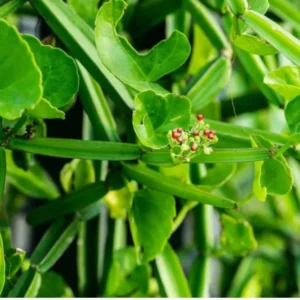
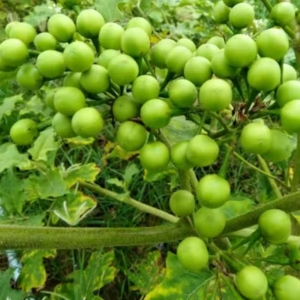


How to Plant Lesser Galangal (Sitharathai) Saplings
- Select a partial shady to full sun exposure location with well-draining soil.
- If you are planting in the ground, loosen and aerate the soil, and dig a hole wide and deep enough to fit your rhizome or sapling.
- For container growing, select a grow bag or pot 12 inches wide and 12 inches deep (1 ft x 1 ft) with drainage holes.
- Pack with a well draining, nutrient rich soil mix and cover the sapling/rhizome in a thin layer of soil horizontally.
- Water gently and keep moist until the first sprout appears.
- Make sure you leave some breathing room (open space). As the plant spreads via rhizomes, it’s almost invasive!
Lesser Galangal (Sitharathai) Plant Care
Temperature
It prefers warm tropical climates at 22°C to 34°C.
Soil
It needs well-draining, fertile, loamy soil high in organic content.
Water
The soil should be kept moist but not wet as waterlogging can cause rot of the rhizomes.
Sunlight
Best in partial shade to dappled sunlight, tolerates some direct morning sun.
Pruning
To promote healthy growth, dried leaves and old stems should be removed regularly.
Care
Moderate care needed; plant needs to be given space to grow underground, and brought up every so often for a new pot.
Manure
Spread some organic compost or cow dung manure after every 30-45 days for good rhizome growth.
Pest Control
Treat with neem oil or other organic insecticides if mealybugs or fungal problems arise.
Potting Mix for the Lesser Galangal (Sitharathai) Plant
- Use a potting mix containing:
- Garden soil (40%)
- Cocopeat (30%)
- Organic compost (30%)
Add neem cake powder to prevent fungal infection and improve root health.
Uses of Lesser Galangal (Sitharathai) Plant
- Famous in Ayurveda, Siddha, and traditional systems of medicine for immune boosting activity.
- Great for colds, coughs, sinus congestion, throat infections and for asthma.
- Improves digestion, appetite & gut problems like dyspepsia, nausea and flatus.
- Also as a natural anti-inflammatory with antibacterial properties.
- This herb supports the immune, digestive, and respiratory systems.
- Employed in herbal infusion, steam, powders for cough treatment, in syrups and in a special compounded preparation called chyawanprash.
- The rhizome is also used in traditional herbal oil, warm herbal oil massage and herbal oil for pain relief and ointment.
- It is also added to traditional dishes, curries and spice blends to add aroma and flavor.
- Internal Use: It can be eaten as tea or paste, or you can chew on a few of the dried pieces.
- You can take a safe dose of Triphala for a long time, as a maintenance dose, but please seek your Ayurvedic practitioner’s advice on the appropriate dosage for long-term use.
Benefits of Lesser Galangal (Sitharathai) Plant
- Boosts the immune system naturally.
- Relieves cold, cough, sore throat with this natural remedy.
- Digestion is improved and it is beneficial in indigestion, acidity and flatulence.
- Promotes lung health and aids in asthma and bronchitis.
FAQs
What are the primary uses of the plant Sitharathai?
Sitharathai is used in traditional medicine for coughs, sore throats, indigestion and arthritis.
Can I grow Lesser Galangal at home?
Yes it does, I have it in my garden, the plant is very easy to grow in pots or ground soil in partial sun and well-drained rich soil.
How long does Lesser Galangal take to grow?
Under good growing conditions, the plant takes 8 to 10 months to produce usable rhizomes.
Can I grow Sitharathai plant inside my house?
Yes, if grown indoors, it should be placed in a location where it can receive some sunlight and be watered regularly, however, it best grows outdoors in semi-shade.
Is Sitharathai just another name for ginger?
No. But it is related to Sitharathai, which is more pungent, aromatic, and medicinal than regular ginger.
How do I prepare and consume Sitharathai for a cough?
The dried root may be powdered or decocted and taken with honey for a cough, along with irritation of the throat.
Does Lesser Galangal require more water?
Moisten the soil when it feels dry—but do not overwater; the roots can rot.
Can I store the harvested roots?
Yes, once dried properly, the rhizomes can be kept for several months in an airtight container.
Is Sitharathai used in ayurveda or siddha medicine?
Yes, it is also the key ingredient in Kashayam that you can use for better respiratory and digestive health.
Where can I get Lesser Galangal live plants online?
You can now purchase healthy live Sitharathai plants online from BharathGreens with secure packing and home delivery.
What does Lesser Galangal smell and taste like?
The plant has a pungent spicy smell and warm, peppery flavor that resembles ginger, but it’s hotter and more medicinal.
How many hours of sunlight do Lesser Galangal plants need?
The plant thrives in 4-6 hours of dappled or filtered sunlight and wants part shade in extremely high heat.
Does Sitharathai attract pollinators?
Yes, when it flowers it attracts bees and other pollinators.
Is Lesser Galangal safe for animals?
It has traditional uses, but pets should not consume it without professional advice.
How often can you harvest roots?
Rhizomes can be harvested when the plant is 8 to 12 months old.
Does it grow well in monsoon?
Yes, as long as excess water does not stagnate around the roots.
Does the Sitharathai plant require pruning?
Yes, light trimming helps maintain shape and promote better rhizome growth.
How tall does Lesser Galangal grow?
It can reach 2 to 4 feet depending on growing conditions.
Alternate Names
Botanical Name: Alpinia officinarum
- Chitharathai Plant in Tamil – சித்தரத்தை செடி (Sitharathai Chedi)
- Lesser Galangal Plant in Hindi – छोटा कुलंजन पौधा (Chhota Kulanjan Paudha)
- Chitharathai Plant in Malayalam – ചിത്തരത്തൈ ചെടി (Chitharathai Chedi)
- Chitharathai Plant in Kannada – ಸಿತಾರ್ತೈ ಗಿಡ (Sitārthai Gida)
- Chitharathai Plant in Telugu – సీతారుతై మొక్క (Seetharuthai Mokka)
- Lesser Galangal Plant in Marathi – छोटी खलांजन रोप (Choti Kalanjan Rop)
Other Common Names:
- Lesser Galangal
- Galanga Root
- Thai Ginger
- Kulanjan
- Greater Galangal (different species but often confused)

Reviews
There are no reviews yet.