


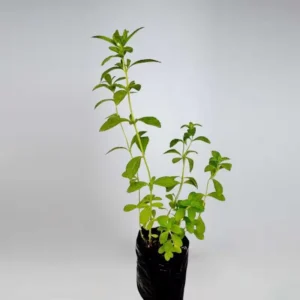
Growth and Development
- Grows to be two feet tall.
- Produces year-round blue to purple flowers.
- Thrives in tropical environments with six or more hours of sunlight and some shade.
- Likes somewhat acidic to neutral ph soil.
How to Plant Kesavardhini Plant Saplings
- Choose a site with well-drained and fertile soil and a sunny location.
- If you are planting in the ground, loosen the soil and dig a hole that is a little larger than your root ball.
- For containers, use a grow bag or pot at least 12 inches in diameter and 12 inches deep (1 ft x 1 ft) with drainage holes.
- Add some good potting soil to the container and put the sapling in the middle.
- Cover the kesavardhini roots with soil, press lightly, and water right away to assist in settling the roots.
- Maintain moist soil until the Kesavardhini plant is established.
Kesavardhini Plant Care
- Temperature: Appropriate for warm weather (20-32 °C).
- Soil: Needs rich, well-drained soil.
- Water: Water moderately, never allow to dry out or become waterlogged. Decrease water in rainy season.
- Light: Needs partial shade to full sun for good growth.
- Pruning: Prune old, dry leaves regularly to stimulate new shoots and denser growth.
- Care: Care-Free Plant; Perfect For The Home Gardener or The Herb Lover.
- Fertiliser: Apply organic compost or cow dung manure at the rate of once every 3-4 weeks during the growing season.
- Pest Control: Spray neem oil or mild organic pesticides as a preventive for common pests such as aphids or mites.
Potting Mix for the Kesavardhini Plant
-
Mix equal parts garden soil, cocopeat and organic compost for best results.
-
Make sure the potting mix is light, airy and well-draining.
-
Add neem cake or powder to ward off fungus and insect pests in the soil.
Kesavardhini Plant Uses:
-
Since ages, it has been used in Ayurvedic and Siddha systems of medicine to promote hair growth and health of the scalp.
-
After application in hair oils, dandruff, hair fall and premature greying of hairs are controlled.
-
In addition to its ability to enhance hair growth and hair coloring, it is often credited with stimulating blood flow to the scalp and strengthening hair roots.
-
The leaves and leaf extracts are also used for wound healing and skin inflammation.
Kesavardhini Plant Benefits:
- Promotes healthy hair growth and prevents hair loss.
- Strengthen hair roots and makes the scalp healthy.
- Has anti-inflammatory and anti-microbial activity.
- Low-care and fast-growing, ideal for herbal homes.
- Provides natural greenery and is a valuable medicinal herb.
Frequently Asked Questions :
For what purpose is the Kesavardhini plant used?
Traditionally, it has been used to cure scalp problems, slow down hair fall, and stimulate hair growth.
How might one use Kesavardhini leaves to promote hair growth?
Boil the leaves in coconut oil, then crush them. Two to three times a week strain and treat the scalp.
What is the height of Kesavardhini plants?
Usually standing two feet tall, Kesavardhini plants
What adverse effects could Kesavardhini plant hair packs cause?
Not significant side effects from outside use. Sensitive skin calls for a patch test.
Does Kesavardhini work well for hair?
Indeed, it is well known to strengthen hair roots and cure dandruff naturally.
How may I spot a Kesavardhini plant?
Search for a little shrub featuring long green leaves and purple-blue button-like blossoms.
Which plant suits hair best?
Among the best Ayurvedic herbs for hair condition are Kesavardhini, Hibiscus, and Aloe Vera.
Why should I buy the Kesavardhini houseplant?
A strong Ayurvedic herb recognised for enhancing scalp condition and hair growth is the Kesavardhini plant. Perfect for home gardens and balcony setups, it’s low-maintenance, easy to cultivate, and provides several health benefits.
Is the Kesavardhini plant suitable for beginners in gardening?
For beginners, the Kesavardhini plant is ideal. It requires minimal watering and sunlight, thriving in pots or soil with low maintenance.
How long will it take for the plant to be ready for hair oil production?
Under simple care, the plant develops quickly, and you can begin gathering leaves for oil making one to two months after planting.
Can Kesavardhini be grown in a pot?
Definitely! Perfect for terrace gardens, balconies, or little outdoor areas, the Kesavardhini plant grows best in containers.
How is the plant packed for transport?
To guarantee safe and fresh delivery, every plant is carefully wrapped in a breathable grow bag, including soil and moisture-retaining packaging.
Kesvardhini plant uses in Tamil?
கேசவர்த்தினி செடி (Kesavardhini plant) பெரும்பாலும் முடி வளர்ச்சிக்கும் முடி கொட்டுதல் குறைக்கவும் பயன்படுத்தப்படுகிறது. இலைகளை எண்ணெயில் காய்ச்சி தடவினால் வேர்களை வலுப்படுத்தி பொடுகு, தலைச்சுருள், முடி மெலிதல் போன்றவற்றை குறைக்க உதவும்.
Kesavardhini plant uses in Malayalam?
കേശവാർദ്ധിനി ചെടി പ്രധാനമായും മുടി വളരാനും മുടി കൊഴിച്ചിൽ കുറയ്ക്കാനും ഉപയോഗിക്കുന്നു. ഇലകൾ എണ്ണയിൽ വേവിച്ച് തലയിൽ തേച്ചാൽ വേര് ശക്തമാകുകയും പൊൻപൊടി, തൊലി ഉണക്കൽ, മുടി തളർച്ച എന്നിവ കുറയാനും സഹായിക്കും.
How to use the Kesavardhini plant for hair?
Grind dried Kesavardhini leaves, then gently heat them mixed with coconut oil. Massage well, apply the heated oil to the scalp, leave for several hours or overnight, then wash off.
Alternate Names:
- Botanical Name: Centratherum punctatum (Also known as Lark Daisy or Brazilian Button Flower)
- Kesavardhini plant in Tamil as a Kesavardhini plant (கேசவர்தினி செடி);
- Kesavardhini plant in Hindi as a Keshavardhini plant (केशावर्धिनी पौधा);
- Kesavardhini plant in Malayalam as a Keshavardhini Cheḍi (കേശവർദ്ധിനി ചെടി);
- Kesavardhini plant in Telugu as a Keshavardhini Mokka (కేశవర్ధిని మొక్క); and
- Kesavardhini plant in Kannada as a Keshavardhini Gida (ಕೇಶವರ್ಧಿನಿ ಗಿಡ).
Other common names:
Brazilian Button Flower
Lark Daisy
False Daisy

Reviews
There are no reviews yet.