


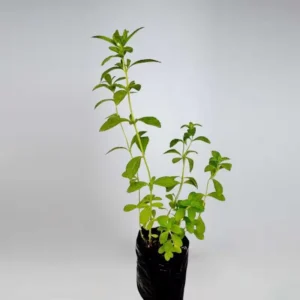
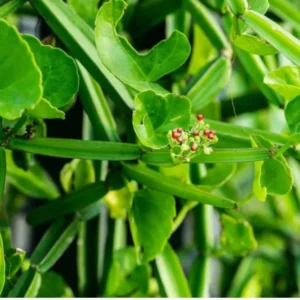

How to Plant Stevia (Sweet Tulsi) Saplings
- Select a sunny site with well-drained soil for best results.
- If you are planting in the garden, loosen the soil and dig a hole just a little larger than the root ball.
- When growing in containers, plant 12 inches wide and 12 inches deep (1 ft x 1 ft) pot or grow bag with sufficient drainage.
- Add up a light, loose soil mixture and gently place the sapling into the center of the pot.
- Fill in with soil and gently tamp down the roots, then water.
- Place the plant in bright light to produce sweeter leaves.
Stevia (Sweet Tulsi) Plant Care
Temperature
Warm weather plant (20°C to 30°C) but can be grown in a cool climate. Avoid frost.
Soil
Grow in loose fertile well-drained soil enriched with organic matter.
Watering
Keep moist but not too wet; water does not need to be withheld.
Sunlight
Sweetness peaks with 4 to 6 hours of direct sunlight a day.
Pruning
Prune regularly to promote bushy growth and stop legginess.
General Care
Drought tolerant and low maintenance; remove spent leaves and flowers and keep the potting mix moist for sweetest nectar and best growth.
Fertilizer
Feed with organic compost or vermicompost every 30 to 40 days during growth period.
Pests
Check aphids and whiteflies; spray neem oil or organic pesticide if necessary.
Potting Mix for Stevia (Sweet Tulsi) Plant
Ideal soil mix includes:
- Garden soil (40%)
- Cocopeat (30%)
- Organic compost (30%)
Add neem cake or cinnamon powder to prevent root diseases and pests.
Uses of Stevia (Sweet Tulsi) Plant
- Used as a natural sweetener for diabetics.
- Promotes blood glucose and fat metabolism.
- Helps curb artificial sweetener cravings.
- Renowned for anti-inflammatory, antioxidant, digestive support.
- Good for the pancreas, digestive tract, and blood sugar.
- As well as in herbal teas, candies, desserts, smoothies and health drink.
- Dry the leaves and powder to substitute sugar .
- It is also found in natural toothpaste, mouthwash and skin care products as an antibacterial agent.
- You can chew leaves or add them while boiling tea or food.
- For controlled usage, particularly for diabetes health, speak to a health professional or nutritionist.
Benefits of Stevia (Sweet Tulsi) Plant
- The natural sweetener that contains no calories.
- Contributes to the maintenance of normal blood sugar levels.
- Make digestion easy and reduce its acidity.
- Safe for diabetics, and those who are avoiding refined sugars.
- Easy to grow, hardy, beginner herb, ideal for kitchen and medicinal garden.
FAQs
Why is the Stevia plant so sweet naturally?
The leaves hold natural substances known as steviol glycosides, which are a lot sweeter than sugar, but they are non-caloric.
Can I use Stevia plant as a sugar substitute?
Yes, either fresh or dried Stevia leaves can be added to tea, coffee, desserts and herbal preparations as a natural substitute for sugar.
How long until Stevia leaves are ready to be used?
Beginning 6 to 8 weeks after planting, as the plant grows full and healthy, so can you harvest Stevia leaves.
Does Stevia like sun or shade?
Stevia prefers full sun and moderate watering. The more sun they get, the better.
How often should you water Stevia?
Keep the soil a little moist — water when the top layer is dry but don’t overwater.
Can Stevia be grown indoors?
Yes, Stevia thrives in pots, balconies and kitchen gardens with well-drained potting soil.
Is Stevia plant good for diabetics?
Yes, Stevia is a safer sweetener for diabetics.
Does Stevia need fertilizer?
A little compost once a month is sufficient; no chemical fertilizers needed.
How to dry Stevia leaves for storing?
Sun dry till crisp and store in a jar.
Does Stevia plant have flowers?
Yes, Stevia bears tiny white flowers, usually late summer or fall.
Can Stevia tolerate heavy rain?
Yes, but avoid waterlogging.
Is Stevia perennial?
Perennial in warm climates and annual in cold regions.
What is the height of a Stevia plant?
Stevia grows 1–3 feet tall depending on soil and sunlight.
Is Stevia good for weight loss?
Yes — zero calories and sugar substitute.
Do Stevia plants need pruning?
Yes — pruning increases yield and promotes bushiness.
Is Stevia organic friendly?
Yes — naturally pest resistant and suitable for organic gardening.
Is Stevia bitter?
Some strains may have a mild herbal aftertaste.
Is Stevia safe for kids and elders?
Yes, safe when used reasonably.
Can you put Stevia leaves directly in tea?
Yes — fresh or dried leaves can be steeped in tea.
Alternate Names
- Botanical Name: Stevia rebaudiana (Sweet Leaf / Sweet Tulsi)
- Stevia plant in Tamil: Madhura Tulsi plant (மாதுர துளசி செடி)
- Stevia plant in Hindi: Meetha Tulsi plant (मीठा तुलसी पौधा)
- Stevia plant in Malayalam: Madhura Tulasi plant (മധുര തുളസി ചെടി)
- Stevia plant in Telugu: Madhura Tulasi plant (మధుర తులసి మొక్క)
- Stevia plant in Kannada: Madhura Tulasi plant (ಮಧುರ ತುಳಸಿ ಗಿಡ)
Other Common Names:
- Sweet Leaf
- Sweet Herb
- Sugar Leaf
- Stevia
Reviews
There are no reviews yet.