
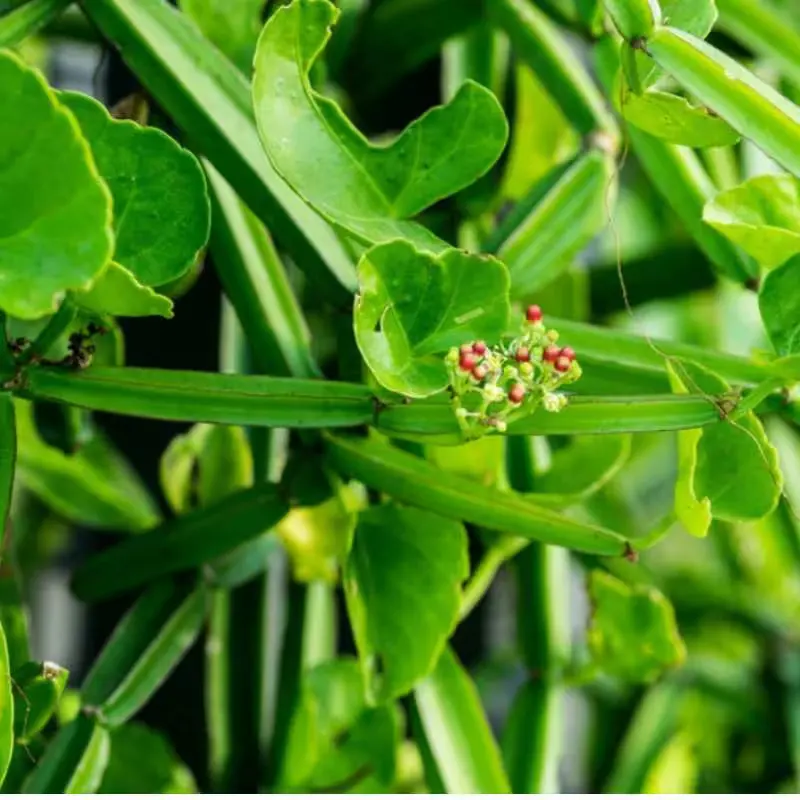



How to Plant Adamant Creeper (Pirandai) Saplings
- Choose a sunny position with well-drained soil enriched with organic matter.
- When planting in the ground, dig a hole slightly wider and deeper than the root ball.
- For container cultivation, select a grow bag or pot with a diameter and depth of 12 inches (1 ft x 1 ft) that has good drainage holes.
- Pack it back with loose, well-draining potting mix.
- Plant the cutting or sapling in the ground, tap down gently, and water lightly.
- Offer a small stick or trellis for the plant to climb and branch out naturally.
Adamant Creeper (Pirandai) Plant Care
-
Temperature Effect:
Warm temperatures are ideal for its growth, 25 °C to 35 °C is more suitable for growth.
-
Soil:
It grows best in a well-drained sandy-loam soil; do not use clayey soil.
-
Water:
Water moderately when topsoil is dry between watering; watering too much will cause rot.
-
Sunlight:
If outdoors, provide 6–8 hours of direct sunlight for the stems’ growth to be healthy and thick.
-
Pruning:
Prune overgrown stems periodically to retain shape and stimulate growth of new stems.
-
Maintenance:
This fast-growing climber, once established, is low maintenance. Provide support for climbing.
Manure: Pour organic compost or cow dung manure every 3–4 weeks to enhance growth.
Pest Control: Spray with neem oil or an organic pesticide if whiteflies or mealybugs are present.
Potting Mix for the Adamant Creeper (Pirandai) Plant
- Mix equal parts garden soil, cocopeat, and organic compost for best results.
- Ensure the potting mix is light, airy, and well-draining.
- Add neem cake or powder to ward off fungus and insect pests in the soil.
Uses of Adamant Creeper (Pirandai) Plant
- Used in Ayurvedic and Siddha medicine for bone and joint strengthening.
- Useful for fractures, joint pain, and arthritis.
- Aids digestion and relieves acidity, ulcers, and bowel obstruction.
- Natural treatment for menstrual problems and inflammation.
- Assists in weight control and enhances appetite.
- Good for bones, joints, stomach, and reproductive organs.
- Used in Pirandai thogayal (pickle), capsules, and Ayurvedic oils for bones and joints.
Also added to herbal powders, syrups, and bone-strengthening formulations. - Can be roasted or ground to a paste with spices to make chutney.
- For medicinal use or extract form, consult an Ayurvedic physician for correct dosage and safety.
Benefits of Adamant Creeper (Pirandai) Plant
- Calcium gluconate strengthens bones and promotes fracture healing.
- Relieves joint pain and inflammation naturally.
- Promotes digestion and gut health.
- Balances body acidity and supports healthy metabolism.
- Fast-climbing herb perfect for home gardeners.
FAQ
What is use of the Adamant Creeper (Pirandai) plant?
In traditional medicine, Pirandai is widely used to heal broken bones, joint pain, arthritis, indigestion, and inflammation.
Is Pirandai good for bones?
Due to its rich calcium and antioxidant content, Pirandai promotes stronger bones and faster fracture healing.
Can Pirandai be eaten raw?
No, Raw Pirandai can cause mouth and throat irritation. Before consuming, it must be washed, peeled, and cooked.
Can I grow Adamant Creeper indoors?
Yes! It does best in full sun and can be grown in pots or garden beds with little maintenance.
How much water does Pirandai need?
It’s a drought-tolerant plant and needs only mild watering once or twice a week.
Where can I order live Pirandai (Adamant Creeper) plants online?
BharathGreens brings you fresh and healthy Pirandai plants for home delivery across India.
Is Pirandai used in Ayurveda?
Yes, it is a prime herb in Ayurvedic and Siddha medicine for fracture healing, digestion, and as an anti-inflammatory agent.
Can Pirandai Herb be used for Hair Care?
Yes, it helps reduce scalp inflammation and prevents dandruff, promoting healthy hair.
Is the Adamant Creeper a fast grower?
Yes, it is a rapidly growing succulent vine that thrives in sunlight and well-drained soil.
How long does it take for Hadjod Plant to grow?
Hadjod grows from seed within a few weeks and matures in about 3–4 months in sunlight.
Can Hadjod Be Grown From Cuttings?
Yes, it can easily be propagated from cuttings placed in well-drained soil or sand mixture.
Does The Bone Setter Plant Require Full Sunlight?
Hadjod grows best in full sun but can tolerate partial shade.
Can The Hadjod Plant Grow Without Daily Watering?
Being a succulent, it stores water in its stem and can withstand drought for several days.
What kind of soil is best for growing Hadjod?
It grows well in sandy or fertile loam garden soil.
Can I Grow Hadjod Indoors?
Yes, Hadjod can grow indoors as long as it receives adequate nutrients and light.
Does Hadjod attract pests or insects?
No, the plant is naturally resistant to most pests.
Can Hadjod be used in Herbal Formulations?
Yes, Hadjod stems are used in Ayurvedic and Siddha formulations to strengthen bones and muscles.
Is Hadjod suitable for organic gardens?
Yes, Hadjod is a pesticide-free herb, perfect for organic or home medicinal gardens.
Where to Buy Live Plants of Hadjod Online?
You can purchase fresh, healthy, live Hadjod (Bone Setter) plants online at BharathGreens, packed carefully to retain freshness.
Alternate Names
- Botanical Name: Cissus quadrangularis (Also known as Adamant Creeper or Veldt Grape)
- Cissus quadrangularis plant in Tamil as Pirandai plant (பிரண்டை செடி)
- Cissus quadrangularis plant in Hindi as the Hadjod plant (हड़जोड़ पौधा)
- Cissus quadrangularis plant in Malayalam as Changalamparanda plant (ചങ്ങലമ്പരണ്ട ചെടി)
- Cissus quadrangularis plant in Telugu as Nalleru plant (నల్లేరు మొక్క)
- Cissus quadrangularis plant in Kannada as Asthisamharaka plant (ಅಸ್ಥಿಸಂಹಾರಕ ಗಿಡ)
Other Common Names:
- Adamant Creeper
- Veldt Grape
- Hadjod
- Bone Setter Plant
- Pirandai
Reviews
There are no reviews yet.