
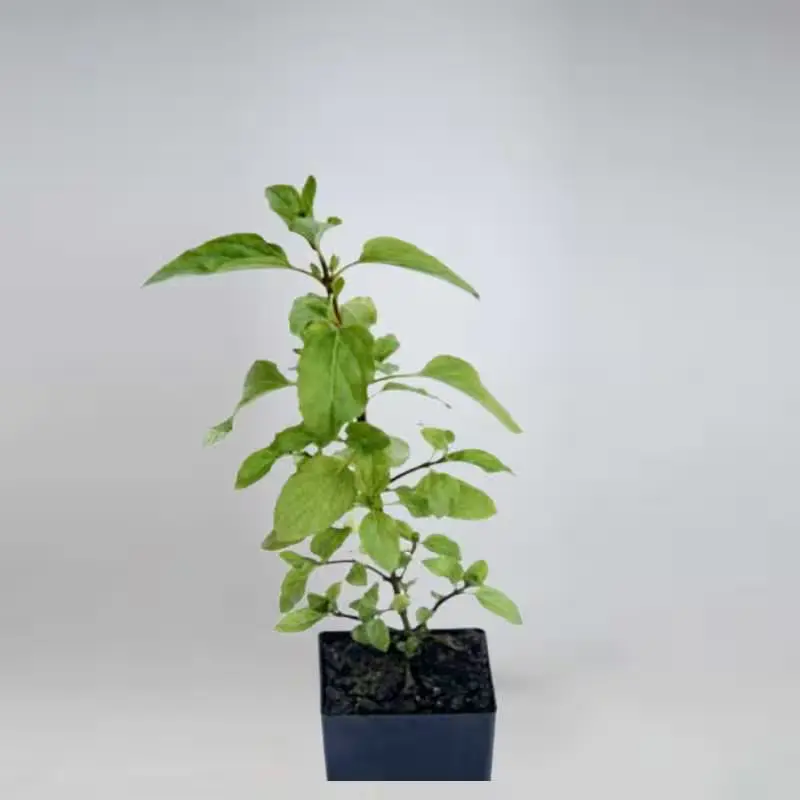


How to Plant Rama Tulsi Saplings
- Select a site where the plant will receive full sun and good air circulation.
- If planting in the ground, loosen the soil and dig a hole slightly wider than the root ball.
- For container growing, select a pot 12 inches wide x 12 inches deep (1 ft x 1 ft) with drainage holes.
- Fill with a rich potting mix, gently place the sapling, and lightly cover the roots with soil.
- Water immediately after planting and place the plant in sunlight to establish it well.
- Pinch the top leaves regularly to encourage bushy growth.
Rama Tulsi Plant Care
Temperature
Performs well in warm climates between 18–32°C and is not frost-hardy.
Soil
Prefers loose, well-drained fertile soil enriched with organic matter.
Watering
Water moderately, keeping the soil moist but not soggy. Allow the top layer to dry slightly before watering again.
Sunlight
Requires 5–6 hours of direct sunlight for healthy growth and strong aroma.
Pruning
Regularly trim flowering tops and long stems to encourage new leaves and compact growth.
General Care
Low maintenance and grows back quickly even after trimming.
Fertilizer
Apply organic compost or vermicompost every 25–30 days to boost foliage growth.
Pest Control
Spray neem oil if aphids or whiteflies appear. Avoid chemical pesticides.
Potting Mix
- Garden Soil – 40%
- Cocopeat – 30%
- Organic Compost – 30%
- Add neem cake powder to prevent fungus and root pests.
- Ensure the soil remains loose and well-drained.
Uses of Rama Tulsi Plant
- Widely used in Ayurveda as an immunity booster and healing herb.
- Helps relieve cold, cough, asthma, bronchitis, and throat infections.
- Supports digestion, stress relief, and detoxification.
- Acts as an antibacterial, antiviral, and anti-inflammatory herb.
- Used for tea, kadha, syrups, essential oils, and skincare preparations.
- Fresh leaves can be chewed or brewed for herbal uses.
- Also used in spiritual rituals and temple offerings.
Benefits of Rama Tulsi Plant
- Boosts immunity and promotes natural healing.
- Supports lung health and breathing ease.
- Helps with stress relief and mental clarity.
- Improves digestion and supports detox.
- A sacred herb suitable for medicinal, spiritual, and home gardening purposes.
FAQ
What is Rama Tulsi used for?
The main uses of Rama Tulsi include immunity, respiratory support, detoxification, and overall wellness.
Is Rama Tulsi easy to grow?
Yes, it grows easily in pots or on the ground with sunlight and moderate watering.
How much sunlight does it need?
It requires 4–6 hours of full sunlight daily.
How often should I water it?
Water only when the topsoil becomes dry; avoid overwatering.
Can it be used to make tea?
Yes, fresh or dried leaves can be brewed into herbal tea.
Can it grow indoors?
Yes, ensure ventilation and access to natural sunlight.
How tall does the Rama Tulsi plant grow?
Typically grows 1–3 feet tall when well cared for.
Does it repel insects?
Yes, its aroma naturally deters mosquitoes and insects.
Can it be grown from seeds?
Yes, seeds germinate in warm conditions within 7–14 days.
Alternate Names
Botanical Name: Ocimum tenuiflorum (Also known as Holy Basil)
Tulsi plant in Tamil as a Tulasi plant (துளசி செடி);
Tulsi plant in Hindi as a Tulsi plant (तुलसी पौधा);
Tulsi plant in Malayalam as a Thulasi plant (തുളസി ചെടി);
Tulsi plant in Telugu as a Tulasi Mokka (తులసి మొక్క);
Tulsi plant in Kannada as a Tulasi Gida (ತುಳಸಿ ಗಿಡ).
Other common names:
Holy Basil, Sacred Basil, Vrinda / Vrindavan Tulsi, Krishna Tulsi (black stem variety), Rama Tulsi (green stem variety)

Reviews
There are no reviews yet.